

I Wrote This Letter to the CEO of a Major Cancer Center After My Dad Died at His Hospital – He Did Not Respond
Below is the full letter I wrote to Dr. Peter Pisters, CEO of MD Anderson Cancer Center, 40 days after my Dad died at their hospital. I sent the letter on January 12, 2025. Dr. Pisters never responded.
Dear Dr. Pisters,
My Dad died 40 days ago, just after 8am on a Tuesday at your hospital. I was with him when he died. It was an awful scene. The MD Anderson Cancer Center staff failed him. Again. For a final, and fatal time.
Over an agonizing year of treatment and mistreatment, a catastrophic failure in care at the hands of MD Anderson providers cost my Dad his life. That failure began in November of 2023 with his initial surgery, and culminated with Dad’s shocking death in a cramped, post-op room on the 5th floor of your Main Building, just a few weeks short of his birthday.
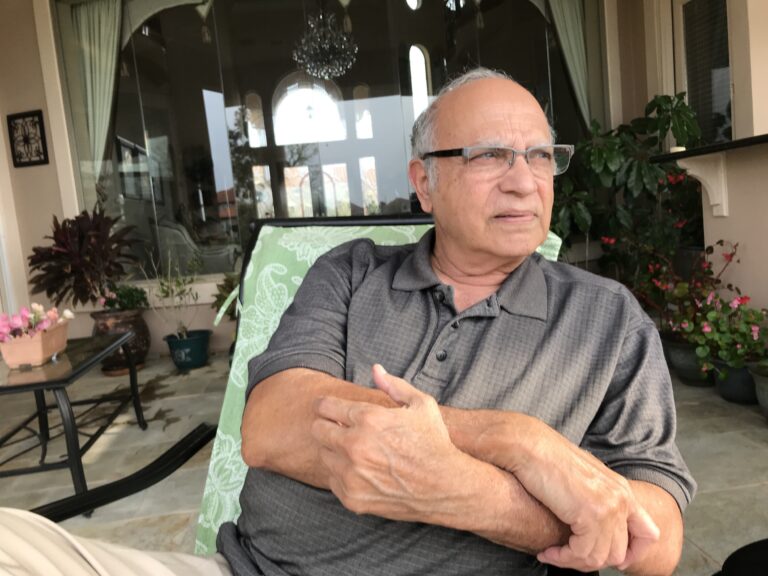
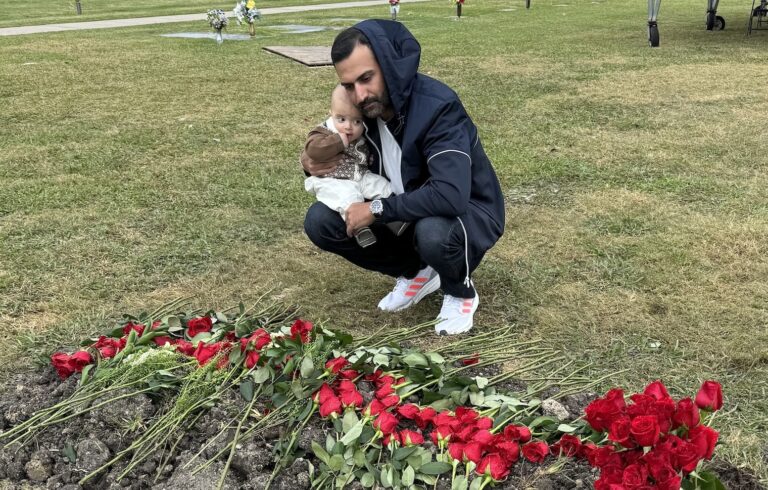
Dad was born on January 1st. He would have been 79 this past New Year’s Day. Even in his advancing age, Dad – like all senior citizens – still had so much more to give and teach and share. Dad had so much more left to enjoy, including his new grandson – my son – who was born just a few months before Dad died.
Dad deserved so much better. He truly was the most kind, gentle, and generous person. He was an engineer, an artist, a poet, a musician, an impressionist, and a handyman. Everyone who knew him, loved him. He and my Mom were married for 52 years. This year was actually the 50th anniversary of Mom and Dad moving to Houston as educated immigrants in search of a bright future. They’ve been pillars in this city ever since. Dad’s life was a beautiful representation of the American Dream.
His death was the most tragic of American nightmares.
That nightmare is recurring daily at your hospital, with similar horror stories happening at other large and lauded healthcare institutions around this country. We’ve collected so many personal accounts from patients and families around the nation who’ve experienced this ongoing dereliction of medical duty. As you know, the healthcare system in this country is badly broken. Although Americans spend twice as much money on healthcare per capita than other high income nations – a total of $4.3 trillion each year – we continue to have worse health outcomes than our peers.
MD Anderson plays a central role in this saga. As you know, your hospital generates $13 billion in yearly revenue, making it one of the largest money-making healthcare institutions in the world. It’s also one of the most highly-ranked healthcare institutions in the world. Yet it’s clear from my Dad’s case – as well as from the cases of thousands of others shared on social media and various other forums – that those rankings and that revenue are built upon a deeply flawed foundation.
While your institution has been rewarded for research and papers and publications, it has missed the mark on patient care.
Unreturned messages. Unanswered questions. Unclear communication. A complete absence of empathy and a devastating dearth of bedside manner. People expect these basics with any business, let alone the best billion dollar business.
From a technical standpoint, your staff was substandard. Inconsistent protocol. Conflicting diagnoses. Botched tests and misread reports. Inappropriate treatment and unforced medical errors. Downskilling of care. All executed within a climate of condescension despite being arrogantly incorrect about virtually everything in my Dad’s case.
This is the experience my Dad and my family had at MD Anderson. And it’s the experience many other families have shared. I’m writing to you today to urge you to make some changes to your organization’s approach, staffing, and culture in order to better benefit the patients you serve. This is a tall order, but one I believe that MD Anderson can and should role model for the entire industry. And one that you can and should champion as the CEO.
In the following sections, I will detail my Dad’s experience, as well as highlight areas in which we can begin to make a tangible difference in the lives of cancer patients and their families.
The Day Dad Died
Dad’s death was an ugly scene. Something I don’t wish on anyone. Watching someone you love suddenly taken from you is traumatic enough. But compounding that pain by witnessing a complete breakdown in procedure, a complete deficit of know-how, and a complete absence of urgency was unconscionable.
Dad collapsed after a nurse we had just met that morning – 30 minutes before he died – ordered him to sit and walk “at least five times each today.” At 7:58 am, he began to move off his bed. At 7:59 am, just a few seconds after rising up, under the direction of another nurse who had not been involved in his case, and with an unqualified PCA by his side, Dad slumped as soon as he sat in his bedside chair. He quickly began to lose consciousness. By 8:01 am Dad had slid onto the cold hospital floor.
The MD Anderson nurses, assistants, and technicians were panicked and unprepared. The “Code Blue” response team was agonizingly slow and unimaginably unconcerned. They took an egregious 10 minutes to arrive at my Dad’s bedside. As you know, rapid response teams are expected to arrive within two minutes. The world’s best hospitals claim a 90-second response time. You have been quoted in countless public and private forums stating that MD Anderson is “the #1 Cancer Center in the world.” Yet your organization’s most important unit – charged with saving lives on the brink – was a shocking 6x slower than the industry standard.
Ten minutes was not the best in the world.
Ten minutes, quite literally, was a lifetime.
I watched helplessly as about half a dozen members of MD Anderson’s “MERIT” (Medical Emergency Rapid Intervention Team) strolled casually down the hallway, as if they were walking to the edge of the driveway to pick up an unwanted package on a cloudy Sunday morning. They were not in a hurry. They were not moving with intention or purpose. They did not run to save my Dad.
THEY DID NOT RUN TO SAVE MY Dad.
I will never forget the faces of those MD Anderson providers, who – like an uninspired team of pampered and privileged athletes – “took this play off.”
Again, losing Dad was hard enough. But losing him this way, at the hands of an unmotivated mob of medics masquerading as “MERIT” was unthinkable.
That final episode of apathy at MD Anderson sealed Dad’s fate.
It was horrifying. And heartbreaking. But it was consistent with the lack of care, concern, and urgency that my Dad and our family experienced with MD Anderson over the past 12 months.
We took Dad to MD Anderson because it was supposed to be a world class institution. It wasn’t. Several different doctors, nurses, and staff members contributed to a yearlong saga of mistakes, misreads, and misjudgments, costing my Dad time, causing him pain, and, ultimately, taking his life.
Delays and Mistakes in Treatment
Following his initial diagnosis of bladder cancer discovered at another hospital, MD Anderson’s Dr. Ashish Kamat performed a Radical Cystectomy on my Dad on November 10, 2023. Dr. Kamat believed it was a “very successful” surgery, and was glad to have removed my Dad’s bladder along with more than 50 lymph nodes. While living with a urostomy bag was a significant detractor from Dad’s quality of life, it was deemed worth the disruption and the discomfort to have a normal life expectancy.
Unfortunately, the cancer returned. The timing of that return is in question due to errors in testing, mistakes in procedures, and delays in care, which I outline below.
While we are disappointed that Dr. Kamat’s surgery was ultimately unsuccessful, we understand that not all surgeons are able to pinpoint every cancerous cell. However, the unacceptable delays and unfathomable mistakes that were committed in the wake of Dad’s subsequent battle with cancer – particularly by Dr. Kamat’s staff – should never have occurred at the “number one hospital in the nation for cancer care.”
What follows is a timeline of the clinical negligence Dad experienced over and over in his final days of life. All of the information below is documented in MyChart, phone records, hospital visits, and email communication. It reveals consistent mistakes in treatment and pervasive delays in care.
October 11, 2024: Initial Detection of Cancer Recurrence
Results from a regularly scheduled quarterly CT scan are posted in Dad’s MyChart. Scan shows a 5.6 x 4.4cm mass that is “concerning for malignancy” with associated prominent perirectal and hemorrhoidal lymph nodes. Robert Ramage, a Physician Assistant on Dr. Kamat’s team, informs my Dad that a biopsy is needed to confirm the diagnosis. However, no clarity or timetable was given for that biopsy.
October 18, 2024: Dad Reports Pain and Escalating Symptoms to Dr. Kamat’s Physician Assistant, Mr. Robert Ramage
Dad sends a message on MyChart requesting an earlier biopsy due to significant and concerning symptoms. Dad tells Mr. Ramage that he needs to “get the biopsy done and the appropriate treatment started urgently because I’m having constant pain down in the rectum area.” In addition to the pain, Dad describes severe constipation. He says that he is “not sure how I’ll go through this weekend.”
Dad does not receive a response. As you know, MD Anderson states that MyChart messages will be responded to within 24-48 hours.
October 21, 2024: Initial Biopsy is Improperly Administered
Dad’s biopsy is finally completed 10 days after the tumor was initially identified. The procedure fails. The instrument is inserted into the inflammatory fluid surrounding the tumor instead of the tumor itself. The staff is aware of the inflammation, yet does not pinpoint the procedure with the appropriate precision. The biopsy report states: “The biopsy material is scanty and consists mostly of hemorrhage. Repeat biopsy may be considered if clinically indicated.”
October 22, 2024: Mr. Ramage Replies to Dad’s Message from 10/18; Dad Continues to Report Pain and Symptoms
Mr. Ramage responds 90 hours after Dad’s message pleading for urgency due to increased pain. Mr. Ramage’s response time is critically slow – 200% slower than MD Anderson’s communicated standard. In addition to his late reply, Mr. Ramage is completely unaware that Dad’s biopsy was already completed, simply stating: “Our department has no control on the scheduling time of the biopsy.”
Dad continues to report rectal pain requiring constant dosing of ibuprofen which is not alleviating the pain. He asks if Mr. Ramage can prescribe something different.
October 24, 2024: Office Still Has Not Contacted Dad w/ Biopsy Results
Dad sends a message to Mr. Ramage who does not reply. No one from the office contacts Dad to discuss findings or next steps.
October 29, 2024 (morning): Dad Continues to Report Symptoms to Mr. Ramage, Begs to See Dr. Kamat
Dad sends another message to Mr. Ramage saying he is worried that there is malignancy, his pain is worse, and asks for any explanation of what is happening to him. He asks to urgently speak to Dr. Kamat. Dad continues to plead for better pain management. Dad also submits a separate appointment request through MyChart begging to see Dr. Kamat. He receives an automated response.
Dad starts asking ChatGPT for help to understand what is happening to him.
October 29, 2024 (late morning): Dad is Told By Mr. Ramage There is No Tumor
Mr. Ramage finally replies after eight days – 192 hours later and 800% slower than MD Anderson’s communicated standard. Apparently, he was on vacation and no process, procedure, or protocol was in place within Dr. Kamat’s team to adequately administer patient care via another team member.
Discontinuing critical patient care for cancer patients due to a physician assistant’s vacation is unfathomable.
In addition to being more than one week late in his reply, Mr. Ramage communicates inaccurate information, telling Dad the “pathology was negative for any tumor” and referring him to Gastroenterology. Mr. Ramage tells Dad he will need to wait another three weeks for an appointment with Dr. Kamat. Despite the critical nature of his case, Dad still has not received any communication at all from Dr. Kamat.
October 30, 2024: Dad Continues to Unsuccessfully Plead for Help
Mr. Ramage finally replies to Dad’s message from 10/18 regarding escalating pain in his rectum. Mr. Ramage states: “I will defer you to pain management.”
Mr. Ramage made no effort to examine or act upon Dad’s documented clinical history (which was all handled within his/Dr. Kamat’s team) or the suspected tumor.
Dad sends another message in response roughly one hour later, reporting that his pain is still worsening and requesting an appointment with a doctor. Mr. Ramage tells him he has “no control” in terms of scheduling.
November 2, 2024: Dad in ER, Tumor Has Grown and Superinfection is Present
Dad finally goes to the ER for pain and fever, CT scan shows continued tumor growth to 6.1cm “along the right pelvic sidewall contacting several centimeters of the rectosigmoid colon with potential invasion” and “new surrounding inflammatory changes that could be indicative of a superinfection” anterior to the left psoas. It is stated that the infection is likely a result of the initial botched biopsy.
Dad spends two days in the hospital before a second biopsy is performed. He is told there are “much sicker patients.” The Interventional Radiologist says that it is “not a life and death matter.”
November 4, 2024: Second Biopsy; Drain for Superinfection, Cancer Detected
Second biopsy is completed and a lymphocele drain is placed to address infection. This second biopsy confirms cancer – urothelial carcinoma with necrosis.
November 8, 2024: PET Scan
PET Scan completed.
November 11, 2024: Dad Still Has Not Been Contacted About Test Results
Dad sends a message on MyChart asking someone to please contact him to discuss his second biopsy and PET Scan results. He asks for a doctor to go over the results with him. Dr. Kamat has still not contacted my Dad.
November 12, 2024: A Nurse Not Involved With Dad’s Case Provides Incorrect Information
A Nurse responds to Dad’s message stating that results “may take up to two weeks to come back,” even though the results are already in MyChart. Dad responds with a detailed reply describing his symptoms, pain, and catheter drainage, and reports continued issues with the inability to release stool. He receives no response. PET Scan results are posted. No response, contact, or communication from MD Anderson.
November 14, 2024: Dad Still Has Not Been Contacted Regarding Test Results
Dad again contacts the office asking for clarity on his biopsy results and information on his PET Scan results from 11/8. He receives no response.
November 19, 2024: Dad Finally Speaks to a Doctor (5.5 Weeks After Tumor Identified)
Dad has his first appointment with MD Anderson since the tumor was identified (five and a half weeks later). I fly into town from Dubai to attend this appointment with Dad and my Mom. We first meet with Mr. Ramage. I ask him about his lack of communication with my Dad during that critical eight day period in which he was completely absent. He says “well, I was on vacation.” My Dad then tells Mr. Ramage that he has severe pain in his rectum. Mr. Ramage laughs aloud.
My Dad has a critical cancer diagnosis that came to life after a failed surgery by Dr. Kamat, a botched biopsy by a lower-level practitioner, and a five-and-a-half week delay in treatment, and Robert Ramage, an MD Anderson physician assistant, laughs at him as he describes the agony he is experiencing.
I have never in my life witnessed anything more cruel or disdainful. At that moment, my mother and I tell Mr. Ramage that we need to see Dr. Kamat immediately. He begrudgingly complies.
Dr. Kamat comes in for a five minute visit with my Dad, Mom, and me. He is short and uncertain in his communication. He states that he “thought the initial surgery went great” and that he “did not expect this to happen.” As a top-rated physician at a top-rated hospital, we expected Dr. Kamat to be more knowledgeable.
November 19, 2024 continued: Dad Finally Speaks to a Doctor (5.5 Weeks After Tumor Identified)
We also speak to Dr. Kamat about the delays in response time from this team, and his lack of engagement. He has no answers. He then says he could no longer help us, and that we need to meet with an interventional oncologist. I ask him why Dad wasn’t connected to the right person weeks ago. He does not have an answer. Dad’s oncology appointment is scheduled for December 5th (Dad died on December 3rd).
We beg Dr. Kamat to arrange an appointment that day with an oncologist, as we know the December 5th date is far too late. After my mother’s final pleading, Dr. Kamat connects us with Dr. Jianjun Gao’s office.
We meet with Dr. Gao later that afternoon. Dr. Gao diagnoses the cancer as Stage IV and recommends chemotherapy and immunotherapy. While Dr. Gao did not disclose any potential risks of immunotherapy – including the possibility of increased inflammation which may further enlarge the mass and compromise the colon – he was attentive, informative, and empathetic. We appreciated those moments of kindness.
Unfortunately, it took Dr. Kamat more than a month to connect my Dad with Dr. Gao.
November 24, 2024: Dad is Denied Initial Chemo Treatment
Chemotherapy is scheduled but not given, as radiology states the infection drain should not be removed and hence chemo cannot begin. The Interventional Radiologist never speaks to Dad, nor is Dad consulted about the potential risks of delaying treatment so that he can decide his own path forward. Dr. Gao’s team accepts the radiology nurse’s recommendation without pushback, despite the growing tumor and Dad’s continuous reports of pain and bowel issues. An external second opinion that our family obtained stated that the drain, based on its placement, had released as much fluid as it could, and would cause no adverse effect if removed.
November 25, 2024: Dad’s Tumor Continues to Grow Rapidly
After much pleading by my family, an initial dose of Immunotherapy is administered. A CT Scan is also performed on Dad. The scan result shows the tumor has grown to 8.3 x 7.6cm. Dad sends a message pleading for the chemo to be administered regardless of the status of the infection drain. Family members – including two MD’s, my brother and my uncle – also reach out and beg the office to take action beyond just accepting radiology’s uninformed recommendation.
November 27, 2024: Chemotherapy Given (6 Weeks After Tumor Identified)
First chemotherapy treatment is finally administered.
December 1, 2024: Tumor is Compressing Iliac Veins and Invading Bowel
Dad goes to the ER due to extreme edema in his legs and pelvic region, and continued lack of bowel movement and rectal pain. Scans show tumor growth to 12cm with new pockets of fluid and compression of the colon and the iliac veins. Bowel obstruction symptoms continue. Despite these alarming findings, Dad is admitted to the hospital via the ER on the basis of hyponatremia alone (low sodium levels). No one from his oncology practice contacts him or comes to examine him. No clear inter-department communication is reported to Dad or our family.
December 2, 2024 (morning): Inappropriate Bowel Regimen Causes Debilitating Pain and Prompts Surgery
Laxatives and an enema are ordered. Our family vehemently questions this protocol, as Dad’s symptoms are a result of a compressed colon, not normal constipation. The enema is administered anyway, causing Dad excruciating pain and extreme distention that persists despite heavy pain medications. Our family of physicians termed this treatment as “criminal.”
December 2, 2024 (morning) (continued): Inappropriate Bowel Regimen Causes Debilitating Pain and Prompts Surgery
Clinical notes show that the ER doctor knew that the bowel was physically obstructed by the tumor, but ordered an enema anyway. Dad continues to message Dr. Kamat during this time, asking him to come examine him. Dad does not receive a response. His care is being managed by ER and GI doctors despite the fact he is a Stage IV cancer patient with a rapidly growing tumor.
December 2, 2024 (evening): Emergency Colostomy Performed
After the disastrous experience of forcing an enema into a mechanically blocked bowel, an emergency colostomy is presented as Dad’s only option to move forward. Dad agrees to the surgery, despite the crushing reality of having two ostomy bags. Even though the operating physicians are aware of blood vessel compression from the rapidly-growing tumor, no specific blood clot mitigation strategies are discussed as part of surgical planning or post-op. The surgery is performed by Dr. Caitlin Hodge.
Dr. Hodge informs our family that – after a three hour operation – Dad’s surgery went extremely well. We visit with Dad in his post-op room, and stay with him as he is transferred to another building.
December 3, 2024: Dad Has Post-Surgical Blood Clot; MERIT Team Takes 10 Minutes to Arrive and Dad Dies As We Wait for Them
I come to visit Dad in the morning. I arrive before 7am. At 7:28am a nurse from Dr. Hodge’s team comes to Dad’s room and instructs him to walk at least five times and sit in the chair at least five times that day. His nurse is nowhere to be found, so I ask for someone to please find her. Another nurse and a PCA come to help Dad instead. At 7:58am, Dad attempts to sit in the chair. By 7:59am, Dad collapses on the chair. The first responders are technicians and inexperienced nurses. They are visibly panicked and confused. They believe he is just having a vasovagal response. They call for MERIT. MERIT does not arrive until 10 minutes later.
My Dad died.
His death was apparently from a blood clot related to the colostomy surgery, which could have been avoided with earlier treatment.
Uncoordinated and Unqualified Care
Despite the fact that Dad had an aggressive tumor and a complex surgical history, his day-to-day care was not being managed by a physician. His clinical course – inclusive of communication, clinical decision-making, and interdepartmental collaboration – was managed by a mid-level provider. That mid-level provider was a physician assistant named Robert Ramage, who – in addition to being mentioned numerous times in the above timeline of events – was named more than 900 times in Dad’s medical records. He was responsible for ordering nearly every test and medication. He was charged with interpreting Dad’s pathology reports. He was assigned to respond to Dad’s MyChart messages. He was MD Anderson’s anointed gatekeeper – holding Dad’s doctors at arms length while he downplayed and discounted Dad’s pleading for clinical urgency, pain management, and clarity on his care plan.
Mr. Ramage was, and is, simply not qualified to handle such cases. His education, his experience, and his professionalism all fall far short of the necessary standard needed to administer care for critically-ill cancer patients. In addition, his insensitive and disrespectful behavior was, and is, completely unacceptable in any business environment, particularly within a cancer center that bills itself as the best in the world.
Robert Ramage failed on all accounts, and my Dad paid the ultimate price.
Some specific examples of Mr. Ramage’s clinical negligence and professional deficiencies include:
- Flippant Misreading of Biopsy: After the initial biopsy was performed on 10/21, Dad waited over a week for anyone to reach out with the results, interpretation, and next steps. Eventually, he finds out that this delay is because Mr. Ramage was on vacation. Finally, Mr. Ramage sends a one-paragraph MyChart message boldly stating that the pathology was “negative for any tumor” and telling Dad he should see a GI doctor instead. A cross-reference of the pathology report, later acknowledged in Mr. Ramage’s own clinical notes, shows that the biopsy was, in fact, improperly administered and ultimately inconclusive. The pathologist noted that the biopsy needed to be repeated if “clinically indicated.” Mr. Ramage ignored all of Dad’s clinical indicators. Had Dad not been hospitalized with an infection for days later, prompting a second biopsy, it is very likely that Dad would have acted on Mr. Ramage’s egregiously incorrect clinical advice and the tumor would have continued to grow, undetected.
- Dismissal of Symptoms: Long before Dad’s second biopsy confirming cancer recurrence, he was reporting pain and concerning clinical symptoms directly to Mr. Ramage. Every time, Mr. Ramage either ignored the messages, responded days or weeks later, or referred Dad to the ER or another department. The heartbreaking reality is that Dad was right – the cancer was invading his bowel. His symptoms did mean something. His pain was real.
Dad’s Message: I’m having a constant pain down in the rectum area. It’s a dull ache with occasional spikes, and combined with my constipation it is very uncomfortable. Not sure how I’ll go through this weekend. Please give my case high priority.
Mr. Ramage’s Response: Our department has no control on the scheduling time of the biopsy. Please reach out to the IR team directly to see if they can move up your time earlier.
Dad’s Message: Mr. Ramage, I had also mentioned in my last message that I have a constant dull pain in the rectum area. It may be the tumor is pushing against some nerves. I’ve been taking Advil for the pain, two in the morning, two in the evening (I can’t take Tylenol cause I’m allergic to acetaminophen). I’m afraid that taking Advil long term may adversely affect my stomach issues. Is there something you can prescribe that is safer for the long term?
Mr. Ramage’s Response: Without knowing the root of your pain, I will defer you to pain management to evaluate you.
Dad’s Message: Mr. Ramage, I just got notification in MyChart that an appointment has been scheduled at the Gastroenterology Center for February 04, 2025. My symptoms are current and urgent and I need intervention right now. Can you please arrange an appointment urgently for this week?
Mr. Ramage’s Response: We have no control on when your appointments can be scheduled outside our urology department…If your pain is that excruciating, you can try going thru our ED to be evaluated.
- Lack of Basic Professionalism: As also documented in the above timeline, Mr. Ramage continued to patronize and poke fun at my Dad throughout their digital and in-person interactions. He belittled him, he rebutted him, and he made no effort to elevate his care. Mr. Ramage took advantage of Dad, using Dad’s age as an avenue to depreciate Dad’s perspective and dismiss Dad’s point of view.
As you know, there are countless documented cases of healthcare providers mistreating elderly patients. However, my family never expected this type of behavior to occur at MD Anderson.
While Mr. Ramage was responsible for the disastrous clinical course that plagued Dad with emotional anguish and physical pain – ultimately costing him his life – this was far from the only example of downskilled treatment utilized by MD Anderson.
Unqualified lower and mid-level nurses, PCA’s, and PA’s were dispatched to handle the vast majority of interactions and deliverables in Dad’s diagnosis and treatment process, resulting in a wholly inefficient and ineffective cycle of care.
The bottom line is that there was no doctor actively managing Dad’s care. No qualified physician was questioning radiology’s recommendation to delay chemotherapy and prevent an imminent bowel obstruction. No physician was questioning the scheduling delays in light of Dad’s growing tumor. No physician was paying any mind to Dad’s increasingly desperate MyChart messages. No physician even bothered to call as the tests and scans got worse and worse.
In addition, this disjointed process resulted in systemic miscommunication and undercommunication between departments, including Oncology, Radiology, Gastroenterology, and ER. There was no clear coordination of care, and no single person or team actively managing Dad’s treatment. Many bucks were passed, and many balls were dropped.
Cancerous Organizational Culture
The lack of urgency, professionalism, communication, and empathy from MD Anderson’s “Care Team” throughout my Dad’s painstaking journey was shameful. These ailments are clearly symptoms of a deeper problem at your institution. As a Cancer Center, it’s important that you know and recognize that the absence of such critical components of care is cancerous to your company’s culture. And MD Anderson’s cancer is late stage.
And, as you know better than anyone, when advanced cancer is present, aggressive and intentional treatment is necessary.
Proper stewardship of organizational culture, as you know, is not only your responsibility, but also the professional mandate for every upstanding CEO. I understand this from my own experience building and leading four different companies, including in my current role as the Chairman and CEO of the world’s first Professional Baseball League in the Middle East and South Asia, based in Dubai.
I am blessed to work with professionals who are the best to have ever played the sport, in an industry that demands that those professionals are elite every single day. I know the standard. I understand the expectation. I help create and uphold that bar.
And I realize that even as the best in the world, you win some and you lose some. You have good days and bad days. You are not perfect or infallible.
However, you always excel at the fundamentals. You always give maximum effort. You always play the game the right way.
You do not make unforced errors at the elite professional level. You do not just “go through the motions.” You do not take plays off.
And you do not walk when you should run.
As someone who lives this daily, I am even more taken aback by the lack of professionalism I witnessed at MD Anderson.
In some ways, I can see how this happens to workers in these types of hospital environments. It could be a cruel truth that an abundance of exposure to pain, suffering, and death can desensitize those who are called upon to heal. Particularly when those practitioners are not buoyed by a greater purpose. It’s a profoundly perilous paradox – the people we entrust to care for us during our weakest moments have seen too much weakness to truly CARE for us.
They have seen too much and now give too little. Too little of their time. Too little of their mind. Too little of their heart.
While I understand that this emotional shield may help your staff endure the realities of their work, it’s clear that it erodes the compassion and empathy that is central to caregiving, leaving patients – like my Dad – even more isolated and afraid.
The challenge is great. But great leaders and great leadership makes sure that an organization’s culture is constructed to amplify its core values, not destroy them. MD Anderson’s core values of “caring,” “integrity,” and “stewardship” have crumbled. And it’s time to do something about it.
I understand that the failing state of healthcare is a nationwide issue. But as one of the most publicized healthcare organizations in the world, it is incumbent upon you to become a flag bearer for the industry. You need to not only set the standard, you need to be the standard. That is the only way forward for organizations who tout themselves as “#1 in the World.”
Sadly, my Dad received more care, insight, and responsiveness from ChatGPT in the last several months of his life than he did from his doctors at MD Anderson.
Waiting for slow, unconcerned responses on Dad’s MyChart app was an emotionally and physically agonizing way for Dad to spend his final months. He was in pain and his MD Anderson Care Team was not moving. Everyone and everything was like that “MERIT” response team.
Too slow. Too casual. Too indifferent.
Too late.
Growing up in Houston and graduating from the the University of Texas, I have always felt immense pride in having such a decorated organization like MD Anderson in my hometown. All those awards. All those #1 rankings.
But what’s become clear is that those accolades have been gifted to MD Anderson based on the most superficial layer of medicine – research, publications, clinical trials. Innovation, resources, and endowments. Yet academia does not guarantee excellence. Facilities do not promise facilitation. And IQ without EQ does not help people.
Industry awards have not accurately measured the most important component of medicine: the quality, clarity, and expediency of patient care.
This becomes even more clear when one reads through the thousands of patient reviews left for hospitals like yours. Needs and expectations are consistently unmet.
It was also clear when I shared my Dad’s experience at MD Anderson on social media. I received thousands of comments and hundreds of messages from people who had similar experiences. Including so many families who were let down by MD Anderson.
We know the actual number of affected families is much greater, with millions of Americans who suffer daily from poorly run hospitals, poorly trained staff, and poorly administered treatment. I intend to galvanize this strong, passionate group of witnesses and survivors to drive awareness, accountability, and action within the industry. And that pursuit begins with change at MD Anderson.
There are good physicians and support staff at MD Anderson. However, it’s evident that even those ethical, well-intended providers have been infected by the cancerous culture at MD Anderson. As the CEO, it is your responsibility to prioritize the cure.
The Way Forward
I know, Dad had cancer. His path forward was going to be tough. But, while the “WHAT” was out of your hands, the “WHY” could be debated, and the “WHEN” was up to a Higher Power, the “HOW” was MD Anderson’s responsibility. The “HOW” is what those top rankings are supposed to ensure. The “HOW” is what is expected of a multi-billion-dollar operation. The “HOW” is what patients are promised after spending hundreds of thousands of dollars in expenses. The ”HOW” is what killed my Dad last month at your hospital.
Dr. Pisters, I implore you to own the “HOW.”
That ownership requires tangible action. The millions of patients you are charged to serve expect that action to begin immediately. My family and I are creating a new organization with a mission to elevate patient care by driving awareness, accountability, and action across the largest healthcare institutions within the country.
Our plan will include:
- Continuing to share Dad’s story and our experience at MD Anderson, while also amplifying the experiences from other families.
- Raising awareness of the patient care deficiencies that are plaguing MD Anderson and other “top” institutions around the country.
- Raising awareness of the specific doctors, nurses, PA’s, and staff members who fail to meet the standard of acceptable patient care; this includes Mr. Ramage whose callousness, brashness, and prejudice was central to my Dad losing critical time for his treatment.
- Driving policy at the local, state, and federal government level to tighten medical malpractice laws and hold hospitals, physicians, and staff more accountable for their actions and inactions.
- Lobbying boards, non-profits, and awards platforms to lower the ratings of institutions who do not provide appropriate patient care.
- Developing our own ranking system that focuses on the qualitative and quantitative metrics that are most important to patients and their families.
- Activating thousands of affected patients and families to share their honest experiences via ratings and reviews of hospitals, physicians, and staff on all available platforms, including Google, Yelp, WebMD, RateMDs, Zocdoc, Vitals, Healthgrades, and a new platform we are creating.
- Leveraging technology to excavate the millions of personal experiences of patients nationwide and centralize them in an open and accessible social format.
- Demanding transparency in patient outcome statistics, including recovery rate, remission rates, and survival rates from high-revenue healthcare institutions.
- Spotlighting the institutions that meet the mark and miss the mark through patient narratives and investigative pieces.
That is Dad’s story.
Those are our indicated actions.
Now, I would like to know yours.
I look forward to your timely response, including the specific steps you plan to take to address the disastrous failures documented in my Dad’s case along with the cases of so many other families. I am also happy to meet you in person to discuss how we can work together to drive this change.
Nothing we do will bring my Dad back.
But maybe we can help save other Dads and Moms.
Moving forward, my family, and thousands of other families across the country, will have a close eye on your institution. We will be watching, sharing, and reporting. You will hear from us again, and often.
Please do treat this communication and the steps that need to follow with urgency.
It is truly a matter of life and death.
Sincerely,

Kash Shaikh
Son, Father, Fellow CEO

My dad was misdiagnosed and passed away in Methodist hospital back in 2020. There was zero communication from doctors/ nurses as they took advantage of the pandemic and didn’t even allow family inside the hospital.
The system is no doubt overwhelmed, greedy and under trained.
Treatments are dictated by the type of insurance you have. I can skip to get earliest appointments because of the private insurance I have as compared to those family members who have Obamacare/medicare.
Patients and family members should be on top of treatments, medicines and staff once in the hospital, the staff should respect what family is saying instead of dismissing it.
In hindsight, whatever happens IS God’s will. We are just mere humans and do not have the ability to resolve such matters. We HAVE to believe that this is what HE willed. “Not even a leaf moves without HIS decree”
Sounds like your father was in pain and suffering a lot, Allah eased his pain.
May he rest in peace.
Losing a loved one is hard but watching them lose the battle to cancer that they fought and lost because her clinic research staff and her oncology Dr don’t communicate proper broke me in a way I am not sure how to fix.
My mother was diagnosed with stage 4 metastasize lung cancer. Her clinic team had told us we fight as long as we can with different target therapy drug to allow her to live and full a productive life for as long as possible. The problem came 1 yr after she started her treatment when we added an optional clinic trail team to her treatment plan.
Normal protocol is that you imaging with contrast where active cancer has been found. My mom had over 3 scans with a clinic trail team on scheduling either where her cancer had gone inactive or without contrast (18 wks) after surgery and started radiation without truely understanding if her cancer was being treated properly.
18 wks or slowly deteriorating with her cancer progress and when she came for her appointment with this team being turned away and telling her that she have to go back to oncologist with no action plan. Another 2 wks to get an appointment and 4 wks of waiting for treatment plan and no new drug therapy so her cancer kept spreading.
The research coordinator would blame the oncology team saying it was there responsibility to schedule the scan and the oncology team would say it was research groups responsibility. All that time I slowly lost my mother. She had been having blood clots form in her body and was sent home with shot to administer in the morning. On the 3rd day I went to wake my mom up for her shot at 5:30 am and found her slumped and non-responsive because she had stroke as a complications from her cancer progression.
The worst mistake was my mom joining an optional trial this hospital had asked her to join to gather data to help aid research of this horrible disease. For that I will never forgive this institute for dropping ball of her scans and allowing her cancer to untreated.
At the end of the day nothing will ever bring her back but I know my mom would have fought a longer battle if only given the proper chance with proper accountability between research staff and oncology team. Time is all anyone want when there loved one is fighting this battle. This hospital stole it from me and my family.
I am a Family Physician with 40 years of clinical experience. Early in my career, taking care of my own patients in the hospital and coordinating specialties, discussing lab/imaging results with patients and families, and being the buffer between indifferent/incompetent providers was part of the job and a significant part of my training. With the advent of mid-level providers and hospitalists (cheaper care) our role in caring for our own patients while they were hospitalized was eliminated. This is the result. If this patient had a PCP (not a siloed mid-level) coordinating care among the different siloed specialties he may still be alive. If he would have died anyway, at least he and his family would have had answers in a timely fashon-with daily updates.
First of all, I am so sad for your loss and the suffering of your Dad and subsequently your family.
I am a retired radiologist and have a jaded perspective based upon my bias. The public and insurance companies have demanded that medicine become more accountable and more like a business model. This has resulted in the fragmentation of healthcare delivery and continued diminished reimbursement for physicians and subsequent increase in the number of ancillary personnel who are paid at a reduced level. The result is the lack of a truly professional relationship between patient and doctor. Physicians are no longer referred to as doctors, but simply as providers and you as a patient are simply a recipient of the system as requested. The threat of litigation simply paralyzes prompt care and the amount of disclosure between patients and providers. I’m sure your lawyers tell you not to discuss a problem or any failure in your system. MD Anderson is the#1 Cancer Center because of the skill of its physicians, research, and clinical trials which occasionally develop ground breaking cures. However, because of the size of the institution the level of personalized care maybe less than a smaller community hospital.
In my past experience as a Chief of Staff of a smaller institution, I discovered that two thirds of the hospital income goes to pay salaries for all levels of personnel from janitors to hospital administrators which requires service in every level 24 hours a day, 7 days a week, 365 days a year.
I shudder to think of what percentage of income goes to pay salaries now in light of hospital ownership of so many physician practices as well as the previous mentioned salary burden. In my own field, I know that reimbursement has substantially fallen from the level I was compensated, however, the number of exams and the number of hours in the day has remained unchanged. No one likes working more for less and you are correct in your assumption that overwork results in a decrease of compassion. The business model has ruined the practice of healthcare, yet I understand society’s need to manage healthcare cost. It is a conundrum and just like justice is a delicate balance between desire and need.
Wishing you luck on your platform for patients to air their grievances. It’s like group therapy, but effectuating any change requires a drastic overhaul of a cumbersome and profit driven system headed by the insurance companies.
Good Luck on your platform,
Sincerely