There is Something Wrong at MD Anderson
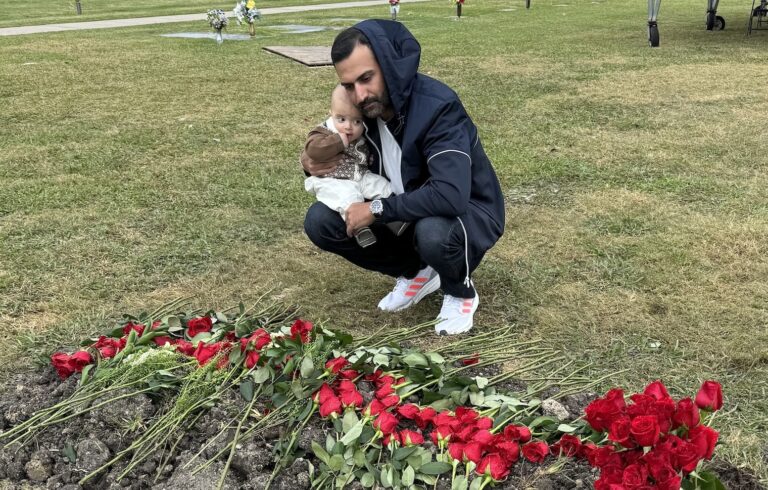
Think about a person endowed with a sense of politeness and compassion, honesty and good humor, humility and pride, the ability to like, love, respect and show kindness. The insights into the richness of life with the power of smile and through arts and humanities. It was not within the realm of my imagination that such a life contained within a single person, Zahid Shaikh, would become my brother-in-law.
MD Anderson is the best Cancer Center in the World. Most take this statement as a column of belief. My brother-in-law also felt safe and comfortable getting treatment at MD Anderson, but in reality later regretted the decision. The saddest aspect of MD Anderson, where science has assembled so much knowledge in physicians, who can treat but choose not to with suitable initiatives. It seems basic motivating factor lacks interest in patient care.
Unfortunately, it is not just the story of my brother-in-law, but several others who share same frustrations. It is time we understand and share to ensure and demand a health care system that works better at MD Anderson. The purpose is to advocate a deeper understanding of insights of health system, which has lost sight of the patient care in some of the institutions, through collection of perspective, resources and stance. The aim is not criticism, but the interventions that would enhance all patients well being. So far, it seems a patchwork of strategies over decades which merely is not working after consuming $4.3 trillion in 2021 for health care system. Hospitals must embrace new policies and change the environment.
The challenges my brother-in-law faced at MD Anderson were of wide range, but mostly stem from internal hospital processes. On a regularly scheduled quarterly CT scan, a concerning but solitary metastatic mass was recognized within the pelvis. This lead to uncertainty and equally distressing as he could not get an early appointment with the physician and instead a physician assistant was designated to manage the serious condition. The physician assistant was on leave and responded after a week. Reliance on a physician assistant, who acted as a substitute for his physician, and made critical independent decisions which qualitatively distorted the kind of healthcare which he deserved. Results linking diagnosis were not properly addressed and timely communicated to the physicians.
Biopsy of the mass was finally done 10 days later. Biopsy was suboptimal and samples obtained were inadequate and not diagnostic. The system is so flawed that no one cared to review if the biopsy was appropriately obtained from the mass. Meanwhile, the mass was complicated by infection which lead to Emergency Room visit with him suffering from pain and fever. After three days of wait in the hospital, a second biopsy of the mass was performed. Pathology report of the biopsy was available several days later online on Mychart and was reviewed by him. He did not receive a call from physician’s office concerning the grave pathology findings. There is also no system prevalent in the hospital for patients to get early physician consultation regardless of the seriousness of the situation. The patient has no way of knowing how to approach physician except for relentless messages but with no answer. He was finally seen by physicians 40 days later after the mass was initially diagnosed. Immunotherapy was given. Second part of treatment which included chemotherapy was withheld for another three days and the reason given was the presence of a drainage Catheter as a contraindication, which in fact was not draining any fluid. This was another disparity in management because of physicians lack of communication. The mass meanwhile kept growing substantially and took his life. My brother-in-law died inside 54 days after the detection of a solitary metastatic lesion. The care was inescapably bad with delays caused by lack of initiatives and lack of communication between physicians.
There is something obviously wrong at MD Anderson, patients don’t get reasonable level of care. Some people at MD Anderson will be afraid to admit, that there is anything wrong with them, but there are stories of faulty attitudes.
The patient is at the mercy of hospitals. Patient suffering from neglect is a constant challenge which leaves scars and the families struggle. Hospitals are huge business, no businessman would consider running their business the way some hospitals operate. Medicine is all science combined with compassion, but this is obscured by commercialism, materialism and poor organization. There can be lack of discipline, commitment, patience, principles and values. Unimaginable blunders and absurdities prevail in some hospitals.
Think of everyone you know, the most beloved people you know, parents, brothers, sisters and friends and remember their hospital experiences, complications and obstacles. You must give them hope and use the power of your words in the direction of care and compassion. Say what is reality and say your opinions and actions, so others won’t be victim of needless suffering.
You must raise a collective voice, a louder voice, to transform hospitals. There are hospitals which provide the most authentic medical care with a patient centered approach, where patients are placed first in the policy engraved in every department and interaction, highly skilled staff communicates personally and honestly, approaches care with compassion, committed to integral systemic purposeful dedication and devotion, collaborates, and fosters a culture of commitment with continuous improvement.
The goal is for all to work together with opinions and suggestions, and take proactive steps for high quality compassionate care tailored to patient needs.
There is a responsibility to provide to others what you expect for yourself.
Amir Ibrahim, MD